Free Shipping Australia Wide!

quince


Poached Quinces and Quince Fig Tarte Tatin

Posted by Sue Heward on

This fruit is better than apples, but 99% of people have never tried it.

Meet the Quince - it looks like a large pear, smells like heaven, but here's the thing. 

You can't eat it raw (or most people don't).

It's rock hard and bitter.

But when you poach it magic happens. The quince transforms into these jewel-like beauties that taste like vanilla, guava and even roses. Below is:

Part 1 recipe I use to poach our Smyrna quinces. This can be done the day before making your tart.

Part 2 takes to you baking the Quince Tarte Tatin.

Part 1: Poached Quinces

I use our Smyrna quinces, that's all I know and I'm told they are the best for cooking.

Give them a good rub before peeling to get the the fluff from the outside. I tend to cook up a big batch- this is your base recipe. Once the quinces are poached you can eat them with cereal, make a quince crumble, sun dry them for the perfect platter dish (or to save you time we have our award winning Sun Dried Smyrna Quince available online) and/or make recipes like Quince Tarte Tatin. This recipe is for 2 kgs of raw peeled/seeded quince so makes a couple of containers worth. You can of course half the recipe if you want to make smaller quantities.

Ingredients

2 kgs peeled, seeded/de-cored raw Smyrna quince. Kept the seedy core I add some of the cores back into the poaching pot to help deepen the colour of the quince. 

2 kgs white sugar

3 whole vanilla beans, sliced into half

Method

1. Slice the quinces (already de-fluffed, peeled and de-corded) into 1/8 pieces. Do be careful de-coring and cutting the quince they can be very hard to cut through so watch your hands.

2. Place the quince pieces into a large saucepan (as an indication for 2 kg of quinces I used a large 10 L saucepan to allow for the sugar and filling with water so it doesn't over flow whilst boiling/simmering). I also included some of the quince seed cores to the pan- these help increase the pectin levels and with the colour change of the fruit. 

3. Pour the sugar right over the top of the fruit and add the split vanilla bean pieces.

4. Pour cold water over the quince fruit/sugar mix until the fruit is covered with water.

5. Bring the water to a simmer and then cover the water with the some baking paper (called a cartouche) to reduce the evaporation of the water and then seal your pan either with its lid or foil. Lower the temperature slightly to keep it a simmer (you don't want it to boil over and/or boil dry). 

6. You can cook also cook in the oven. For my latest version of the Quince Tarte Tatin featured here I cooked on the stove top. The heaviness of your pan makes a difference, I use my noni 10 L pan (not sponsored), the conductivity is brilliant and certainly quickens the cook time. The length of time cooking depends on how you like your quince poached. Using the noni pan it took 2 1/2 hours to reach a very deep almost caramelised quince. This is personal preference, you don't need to cook it this far, but also depending on your vessel, it may take long to cook to reach a deep colour. Keep checking along the way.

7. When finished you are left with a big batch of quince that will last in the fridge for various preparations such as your breakfast granola each day or the tarte tatin below.

8. Keep the poaching liquid, this will be quite thick. Its delicious as is but I use it in the base of your tart below.

9. Discard the vanilla beans and seed core pieces of the quince, their job is beautifully done now.

Part 2: Quince Fig Tarte Tatin

Ingredients

Approx 3/4 cup of your thickened quince poaching liquid/jelly. This is to personal taste here you can add more.

Approx 3- 4 cups of your cooled poached quince pieces. This is approximate and does depend how high you want to make your tart. I found going 2 layers thick of cooked quince pieces worked well.

3-4 White Smyrna semi sun dried figs sliced thinly

3 tablespoon of Sticky Quince Syrup

unsalted butter to crease the sides of your pan

1 sheet (375g packet) Carême Spelt or All Butter Puff Pastry, defrosted (or what you can buy locally or bake)

Method

1. Preheat oven to 190°C (fan-forced).

2. In a 22cm cast iron or heavy stainless steel frying pan, spoon the quince jelly in an even layer over the base. On medium heat, cook to quince jelly until it melts and bubbles alittle then take on the heat to cool slightly.

3. Once the frying pan with the quince poaching syrup in it has cooled, rub a thin smear of butter on the inside edge of the pan. This will help release the tart after cooking. 

4. Place the poached quince pieces in the pan, cut side up. I did two layers of quince, you want the quinces to be packed as tightly as possible and a good height/depth in your pan.

5. Insert the pieces of cut dried figs into any gaps between the quince. These add a beautiful contrasting flavour and texture to the sweet quince.

6. Unroll your pastry sheet and cut a circle slightly larger than your pan. Place the pastry on top of the poached quince, then using the back of a spoon orf your fingers, tuck the pastry into the edges of the pan to hug the fruit (this will form the sides and base of your tart once cooked and flipped). If you are feeling confident try making undulations in the pastry as they look fantastic when you flip the tart over.

7. Score and put small holes in the pastry a few times to allow the steam to escape while cooking. Bake in the oven for 25-30 minutes, or until the pastry is golden and crisp on top.

8. Remove from the oven and allow to cool for 10-15 minutes. Use a knife to go around the edge of the pastry to make sure nothing is sticking to the sides of the pan.

9. Place a large plate on top of the pastry. Get yourself setup and quickly flip the pan and plate over (using oven mitts to hold the pan as it will be hot). Wiggle the pan until you can feel everything free and then lift it off.

10. Slice and serve warm with greek yoghurt.

This is super rich and the tartness of the yoghurt balances it perfectly.

Serves 10 people.

We will be demonstrating this cook and talking about our Heward family orchard on Lets Eat with George early in May 2026.

Read more →

Sticky fruit pudding with salted caramel & coconut topping

Posted by Sue Heward on

This recipe will knock you socks offer. A total delight from a Yotam Ottolenghi and Helen Goh recipe with my little twists added to include our diced dried fruit and sticky quince syrup (because they are a flavour match made in heaven).

Sticky Fruit Pudding with Salted Caramel and Coconut Topping

Ingredients
400g Singing Magpie diced dried fruit
1 tspn bicarbonate of soda
250 mls water
2 tlbspns Sticky Quince Syrup
200g plain flour
2 tspn baking powder
1/4 tspn salt
125g unsalted butter at room temp
200g caster sugar
1 large egg (again I try to have this a room temp)
1 tspn vanilla extract

Salted caramel coconut topping
75 g unsalted butter
1 tlbspn Sticky Quince Syrup
95g soft brown sugar
60 ml thickened cream
95g shredded coconut
1/4 tspn salt

Method
Place the diced dried fruit, sticky quince syrup, bicarb soda and water in a saucepan. Bring to a boil, then simmer over a medium heat for about 5 minutes, stirring from time to time. Remove from the heat and set aside until cool.

Preheat the oven to 200°C/180°C Fan. I used a muffin tray and muffin liners. You can also use lined bottomless cake rings on a baking tray. 

Sift the flour, baking powder and salt together into a bowl and set aside. Place the butter and sugar in an electric mixer and beat on a medium-high speed for about 2 minutes, until light and fluffy. Add the egg and vanilla and beat until combined. Reduce the speed to low and, in alternate batches, fold in the dried fruit mix and the sifted dry ingredients.

Divide the mix between the muffin liners and bake for about 25 minutes, or until a skewer inserted into the centre comes out clean.

Ideally make the topping while the cake is baking but I did forget, lucky this topping comes together very quickly. Place all the ingredients for the topping in a saucepan and stir over a low heat until the butter is melted and the ingredients are combined.

Once the cakes are cooked, remove from the oven (keep the oven on) and spoon about 1½ tablespoons of the topping mixture over the surface of each pudding. Return to the oven for another 12 minutes, or until the topping is golden brown.

Remove from the oven and leave to cool for 10 minutes, or until they come to room temperature, before transferring to a wire rack to cool before serving.

These will keep for up to 2 days at room temperature (or in the fridge, if it’s particularly warm) in an airtight container. Serve them as they are, or better still warm them through for 5 minutes in an oven or the microwave and serve with some cream or ice-cream.

Utterly delicious. A total crowd pleaser. Makes 12

UPDATED RECIPES 6 September 2024: 

    Read more →

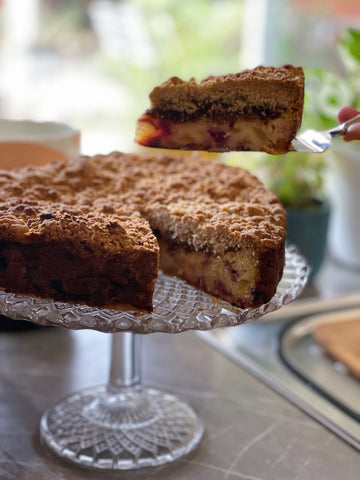
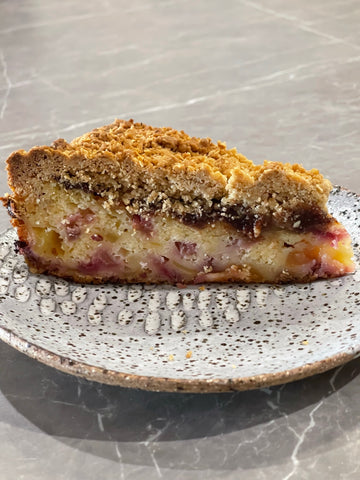
    Rhubarb, Apple and Quince cream cake

    Posted by Sue Heward on

    If there is one cake you bake this winter please make it this one. This is my take on a cake by Belinda Jeffery. You can find the original recipe here. I'm so enamoured with it and completely love the texture that cream brings to it rather than using butter. So, so, light but so much flavour, it serves 8 but you could definitely stretch it further.

    Rhubarb, apple, quince cream cake

    Rhubarb, Apple and Quince cream cake

    250g Apple peeled and chopped into 1 cm chunks

    200g rhubarb washed and chopped chopped into 1 cm chunks

    1 1/2 cups self-raising flour

    1 teaspoon baking powder

    1/4 teaspoon salt

    Finely grated zest 2 large lemons

    1 large egg

    1 cup (220g) caster sugar

    1 cup (250ml) pure cream

    1 1/2 teaspoons vanilla extract

    4 tlbspn Quince butter (I keep a stash of this in my fridge, the recipe is here)

    Crumble topping

    1 cup rolled oats / oatmeal

    1 cup self-raising flour

    1 cup brown sugar (loosely packed)

    1/2 tsp baking powder

    1 tsp cinnamon powder

    125g / 1/2 cup unsalted butter, melted

    Pinch of salt

    Vanilla bean ice cream or cream, to serve

    Method

    1. Preheat your oven to 175 C. Butter a 23 cm springform tin, line the base with buttered baking paper and then dust the tin with flour.
    2. Have your chopped rhubarb and apple in one bowl.
    3. Measure the flour, baking powder and salt into another bowl. Use a whisk to mix them together for 1 minute so they’re thoroughly combined. Sprinkle in the lemon zest and whisk for another 10 seconds or so, then set the bowl aside.
    4. Whisk an egg into into your electric mixer bowl and beat it briefly (I did this by hand). Then I used the whisk attachment on my mixer. Add the caster sugar and whisk together for 1 minute so the mixture looks creamy. Pour in the cream and vanilla and whisk again until everything is thoroughly combined.
    5. Add all but 1 tablespoon of the flour mixture to the mixer bowl, and use a spatula to stir the two together. Do this by hand and don't beat just fold as this causes the cake to toughen. The batter is still lumpy when you are finished.
    6. Sprinkle the reserved tablespoon of flour mixture over the rhubarb/apple mix in the bowl, and give it a good shake so the pieces are lightly dusted in flour. Now, fold the fruit into the batter – it will be thick with fruit. Scoop the batter into the prepared tin and use a palette knife to spread it out evenly. 
    7. Spoon your quince butter over the cake mixture.
    8. Crumble preparation: Place Topping ingredients in a bowl. Mix until clumps form, like wet sand. Spread over your cake, crumbling with fingers if required to get that crumbly topping.
    9. Put the tin in the oven and bake the cake for 50 – 55 minutes until a fine skewer inserted in the middle comes out clean. Remove the cake from the oven and sit it on a wire rack. Let it cool for about 10 minutes before unclipping and remove the sides of the tin. Carefully remove the base. Leave it to cool until it’s room temperature.

    Serve with ice cream or cream. Belinda does write that you can freeze the leftover cake for up to 3 weeks, but we did just eat it all. 

    Rhubarb, Apple quince cream cake


    Read more →

    Our Family ANZAC biscuit recipe

    Posted by Sue Heward on

    ANZAC day is a day for making ANZAC biscuits and remembering our Poppas and Nannas. How great it would be if they were still here.

    I could ask Jack what he thought of our Fig Leaf and Rose tea.

    My Barmera Poppa Jeff was the baker, he would make the biscuits.

    Barmera Nanna would make her famous scrambled eggs and Margie, Monash Nanna would let us dress up in her extraordinary hat collection. 

    This is our family ANZAC biscuit recipe, created by Auntie Rene, preserved by Auntie Joy and dabbled with by me.

    ANZAC biscuits

    Ingredients

    1 cup plain flour

    1 cup rolled oat

    1 cup sugar

    1 cup shredded coconut

    125 g butter

    1 tblspn sticky quince syrup

    1 tblspn golden syrup

    2 tblspn water

    1 tsp bicarbonate of soda

    Method

    Set your oven at 175 degrees Celsius.

    Sift the flour into a bowl. Add the sugar, rolled oats and coconut.

    In a saucepan add the butter, syrup and water and bring to boil.

    Stir in the bicarb soda and then take off the heat.

    Add in the dry ingredients. Mix thoroughly.

    Put teaspoons of mixture onto 2 greased trays (you need to allow space for the mixture to spread) and bake at 175C for approx 10 - 12 minutes.

    Biscuits will harden when cool. Watch them, I did nearly burn them.

    Makes 30 biscuits.

    Read more →

    Autumn Salads- bitter greens, figs, and quince...my current favourites

    Posted by Sue Heward on

    Here is my take on using bitter greens combined with our sun dried figs & quince and sticky quince syrup (perfect addition to any salad dressing among other things).... sensational Autumn salads.
    Read more →